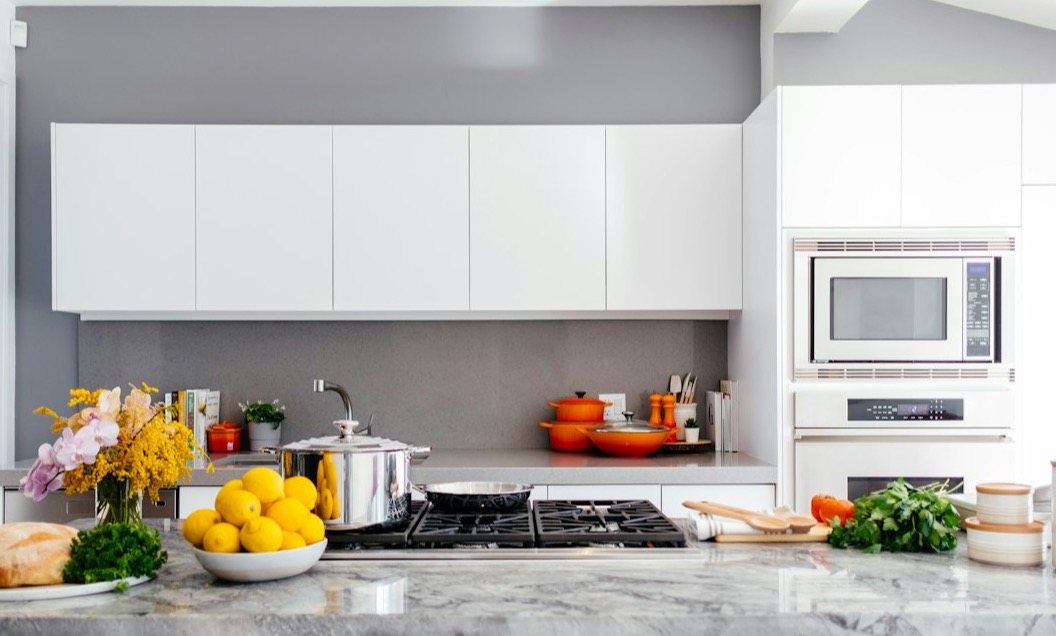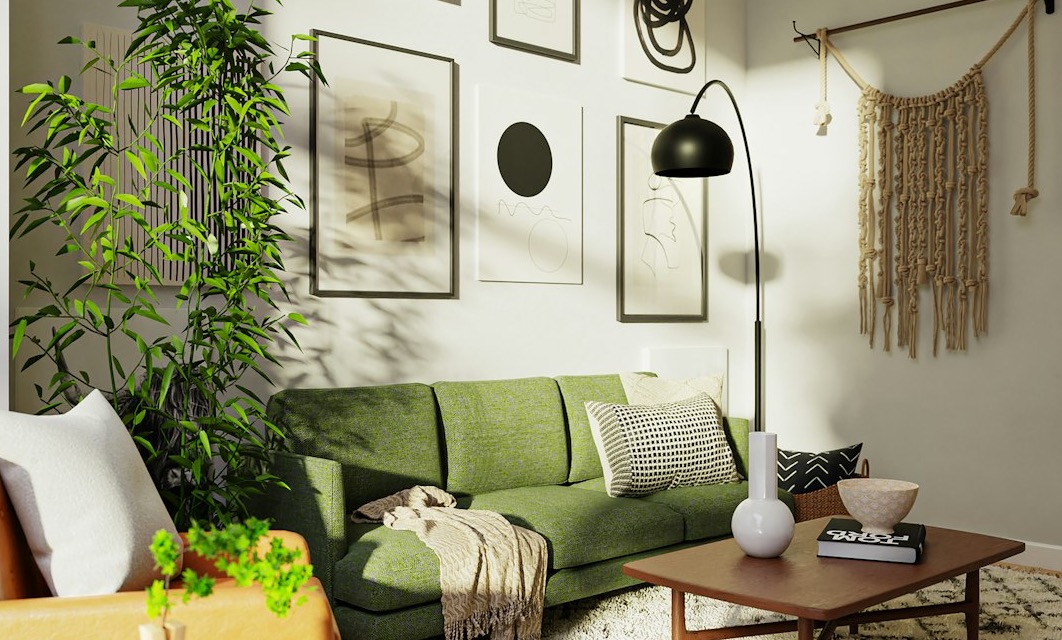
Have you ever finished unpacking a room that looked great at 2:00 PM in natural afternoon sunlight, only to flip the wall switch at 8:00 PM and watch the entire room turn flat, shadowy, and hospital-cold? In almost every rental apartment and builder-grade starter home across North America, the electrical plan puts a single flush-mount dome fixture dead-center in the ceiling—often loaded with mismatched 4000K or 5000K bulbs left behind by the previous resident.
Overhead lighting casts downward shadows under your eyes, flattens fabric textures, and makes wood tones look washed out. Interior designers rarely turn on the central ceiling light after dusk. Instead, they build a three-layer lighting plan at eye and table level. Here is the exact lighting math you need to make any room glow.
1. Decode the Light Bulb Box: Kelvin (Color) vs. Lumens (Brightness)
Before buying another lamp, take five minutes to check the fine print printed on the base of every LED bulb currently screwed into your sockets. Two numbers control how your room feels at night:
- Kelvin (K) = Color Temperature (Warmth vs. Coolness): The Kelvin scale runs from warm candle-gold (2000K) to icy blue hospital daylight (5000K+). When you mix a 2700K warm bulb in one corner lamp with a 5000K “Daylight” bulb in the kitchen or hallway, your eyes register the clash immediately as visual chaos.
- Lumens (lm) = Actual Brightness: Watts only measure energy draw; lumens tell you how much light the bulb actually puts out. A standard 800-lumen LED bulb (roughly equivalent to an old 60W incandescent) is bright enough for a main reading lamp, while a 450-lumen bulb (40W equivalent) is ideal for smaller accent lamps and bedside sconces.
- CRI (Color Rendering Index) = Paint & Wood Accuracy: Cheap dollar-store LEDs have a CRI around 80, which makes beige walls look greenish-grey and oak floors look muddy. Always look for CRI 90+ on the package so your paint, art, and wood tones look true to life.
| Room Type | Ideal Kelvin Temperature | Target Total Lumens | Recommended Fixture Mix |
|---|---|---|---|
| Living Room | 2700K (Warm White) | 1,500–2,500 lm (dimmable) | 1 corner floor lamp + 1 sideboard table lamp + 1 cordless accent/picture light |
| Bedroom | 2200K–2700K (Soft Warm) | 1,000–1,800 lm | 2 bedside sconces or table lamps (450 lm each) + warm linen pendant on dimmer |
| Dining Space | 2700K (Warm White) | 1,200–2,000 lm | 1 low-hung chandelier (30″–36″ above table) on a wall dimmer + taper candles |
| Home Office & Kitchen | 3000K (Neutral Warm White) | 2,500–3,500 lm | Overhead ambient light + under-cabinet LED bars or focused desk task lamp |
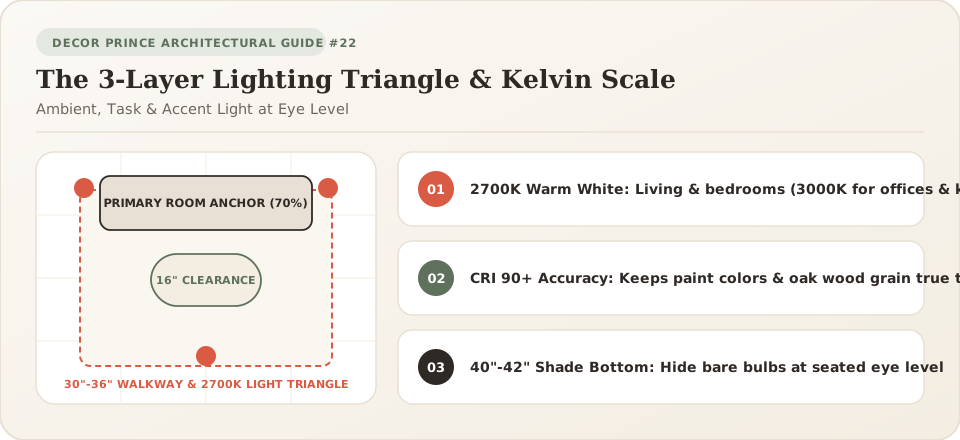
2. The Three Layers of Room Lighting (And the Triangle Rule)
Every comfortable room combines three distinct layers of light arranged in a loose triangle around the perimeter of the space so no single corner falls into a dark cave:
- Layer 1 — Ambient Light (The Overall Glow): Soft, diffused light that bounces off walls and ceilings—such as a shaded floor lamp in the corner or a fabric-diffused pendant light set to 50% on a dimmer switch.
- Layer 2 — Task Light (Focused Function): Directed light positioned right where your eyes work—like a swing-arm sconce beside your sofa reading spot, an adjustable desk lamp, or magnetic LED bars under dark kitchen cabinets.
- Layer 3 — Accent Light (Mood & Depth): Low-lumen decorative pools of light (150–300 lumens) that highlight texture—such as a small USB-C cordless lamp tucked inside a bookshelf cubby, a brass picture light above a framed print, or a candle warmer lamp on the entryway console.
What to Look For in Plug-In Lamp Dimmers & Smart Bulbs
If you rent and cannot replace wall switches with hardwired dimmers, use plug-in tabletop slider dimmers or group your floor and table lamps onto smart plugs. Lowering your lamp brightness from 100% to 45% after 8:00 PM is the single fastest way to make a room look expensive on a budget.
3. Lamp Shade Height & Material Rules
When you sit down on your sofa or lie back against your bed pillows, you should never be able to see the bare glowing light bulb underneath or above the rim of a lamp shade. For a standard living room side table (20 to 24 inches tall), choose a table lamp that stands 24 to 28 inches tall so the bottom rim of the linen shade sits right around seated eye level (40 to 42 inches from the floor).
Explore Related Room & Budget Guides:
Common Questions About Room Lighting
Why do my new LED bulbs buzz or flicker when I use a dimmer switch?
Older wall dimmer switches were engineered for high-wattage incandescent filaments and don’t play nicely with low-wattage LEDs. Either make sure your bulbs explicitly state “Dimmable” on the box, or swap the wall switch for an LED-rated CL dimmer (or use a smart bulb that dims via its internal chip).
Should I choose white paper/linen lamp shades or opaque metal lamp shades?
In a small or dark room, choose off-white or oatmeal linen shades because they diffuse warm light outward in 360 degrees across the walls. Opaque metal dome shades direct 100% of their light straight down in a narrow cone—which is great for a desk task lamp, but leaves the surrounding walls dark.