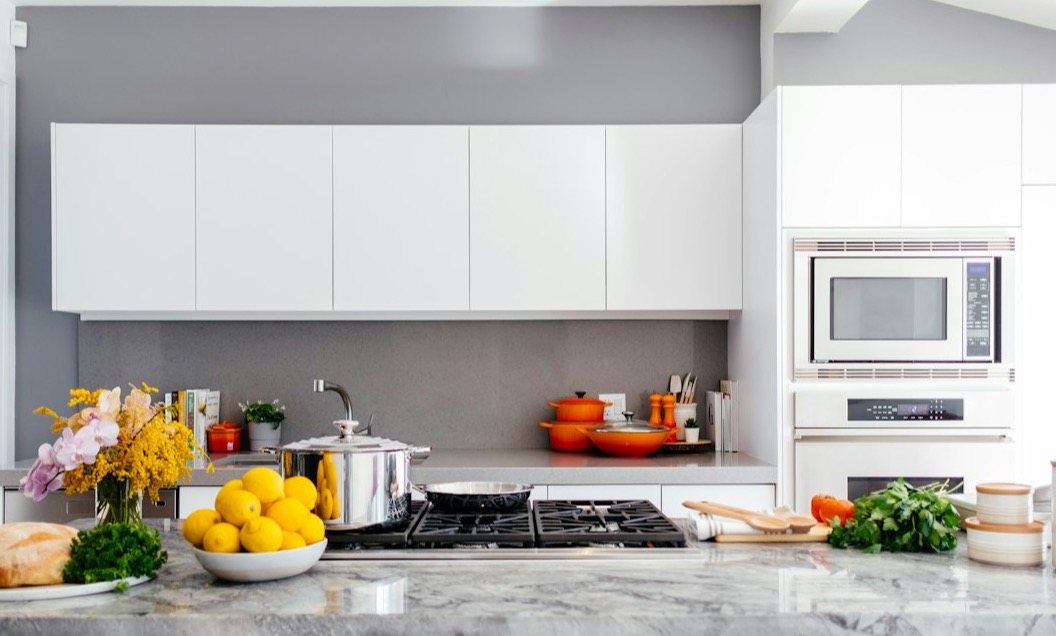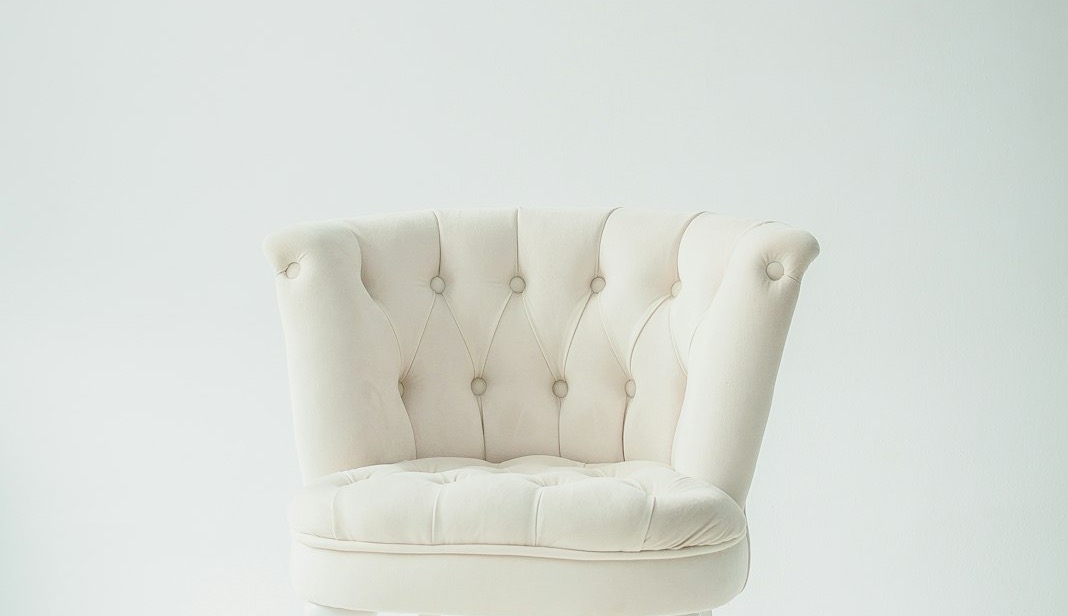
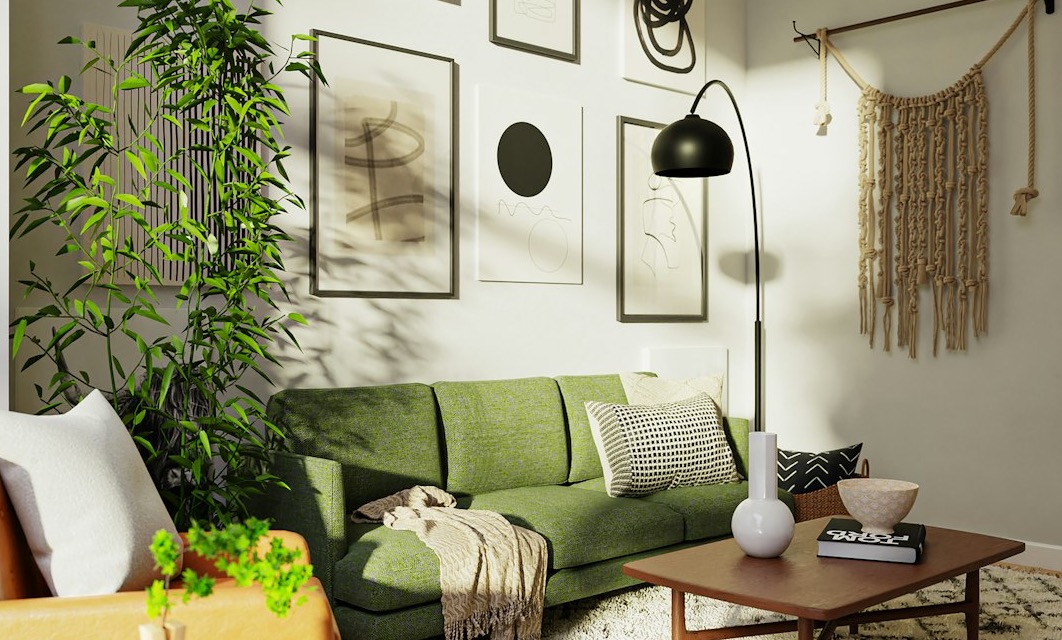
When you move into your first apartment after university—or upgrade from a 550-square-foot rental into a three-bedroom starter townhome—the echo of empty rooms creates an urgent itch to fill every corner immediately. That urgency is what drives people to spend $4,000 in a single Saturday buying a matching 7-piece living room bundle, cheap particleboard side tables, and random clearance wall art just so the house looks “done” before family visits.
Six months later, once you actually see where afternoon sunlight lands and how you walk from the kitchen to the sofa, half of those rushed move-in-weekend purchases turn out to be the wrong size or style. Here is the stress-free Phase 1, Phase 2, and Phase 3 Furnishing Roadmap—plus where to splurge and where to save every dollar.
1. The 3-Phase Furnishing Timeline (Month 1 vs. Month 3 vs. Month 6+)
Instead of spreading your budget thinly across five rooms at once (which leaves every room half-finished), furnish in concentric circles starting with daily physical comfort:
- Phase 1 — Week 1 to Month 1 (Sleep, Sit & Window Privacy): Buy only the pieces your body physically rests on for 8+ hours a day and the window coverings you need to sleep. That means a supportive mattress + simple platform frame, your primary living room sofa, bedroom blackout/linen curtains, and two 2700K lamps so you aren’t living under bare ceiling bulbs while unpacking boxes.
- Phase 2 — Month 2 to Month 3 (Surface Function & Floor Anchors): Once your sofa and bed are in place and you’ve walked through the rooms for three weeks, you know your exact traffic paths. Now measure for your 8′×10′ living room rug, coffee table, dining table + 4 chairs, and entryway shoe cabinet.
- Phase 3 — Month 4 to Month 12 (Vertical Character & Layering): Save accent chairs, sideboards, oversized wall art, mirrors, plants, and decorative pillows for last. Buying wall art and throw pillows after your main furniture and rugs are in place guarantees the colors and scale will harmonize.
| Furniture Category | Splurge or Save? | Budget Allocation Share | Why It Matters |
|---|---|---|---|
| Primary Sofa & Mattress | Splurge (60% of room budget) | High priority | Cheap foam cushions flatten in 14 months; kiln-dried frames and high-density foam last 8–12+ years |
| Coffee Tables, Side Tables & Nightstands | Save / Thrifted / Flat-Pack | Low priority | Hard surfaces don’t experience suspension wear; secondhand solid wood or upgraded flat-pack looks great |
| Dining Chairs vs. Dining Table | Splurge on Chairs, Save on Table | Medium priority | Your back feels a cheap dining chair after 20 minutes; a simple solid oak or butcher-block table lasts forever |
| Lamps, Frames & Throw Pillows | Save (Upgrade Bulbs & Inserts) | Low priority | A $35 ceramic lamp with a 2700K bulb and a $20 linen cover with a 22″ feather insert look identical to $300 designer versions |
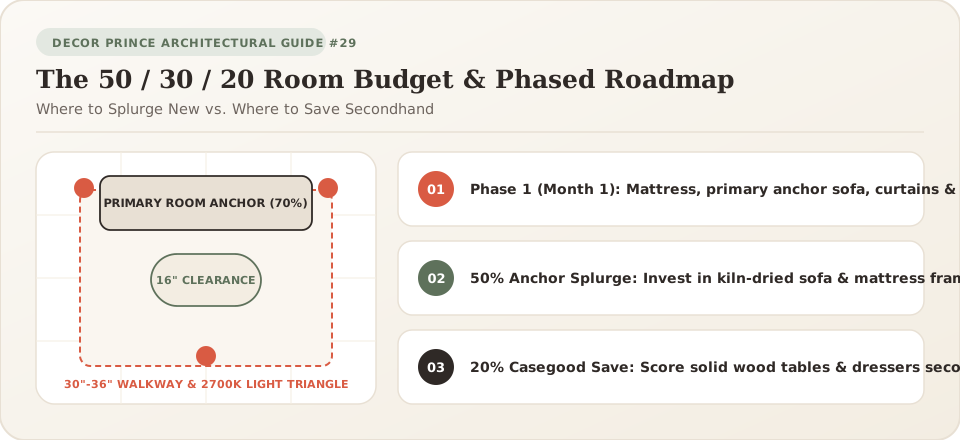
2. How to Allocate a Real-World Room Budget (The 50 / 30 / 20 Rule)
Suppose you have $2,000 (or $3,500) set aside to furnish your living room from scratch. Here is how to divide the pie so the room feels high-end:
- 50% to 55% on the Anchor Sofa: Put half of the entire room budget into the best apartment-scale sofa you can afford with a solid wood frame and removable performance cushions.
- 25% to 30% on the Area Rug, Drapery & Lighting: An 8′×10′ rug, floor-to-ceiling linen curtains, and three warm 2700K lamps cover the largest visual surface area of the room after the walls.
- 15% to 20% on Hard Casegoods & Wall Art: Use Facebook Marketplace, estate sales, or flat-pack upgrades (see How to Make a Room Look Expensive on a Budget) for your coffee table, media console, and picture frames.
What to Always Buy New vs. What to Score Secondhand
Older vintage dressers, dining tables, and wood side tables from the 1960s–1990s were built from real solid oak, walnut, or maple dovetail joinery—and often sell secondhand for less than a new hollow particleboard table. Save your “buy new” dollars for soft upholstery and mattresses.
Explore Related First-Home & Budget Guides:
Common Questions About Furnishing a First Home
Is it better to finish one room completely or buy one piece for every room?
Once your bed is set up, finish one main room completely (usually the living room) to 90% before moving on to guest rooms or dining rooms. Having one fully finished, cozy sanctuary where you can relax at night without staring at unpacked boxes keeps renovation and move-in fatigue at bay.
Should I paint before moving furniture in or wait until after?
If your walls are currently painted a dark or damaged color you know you hate, painting an empty house before furniture arrives is 10 times faster. However, if the walls are already a neutral off-white, wait until your sofa and rug are in place so you can pick wall paint that matches your fabric undertones.