

From November through March across Canada and the northern tier of the United States, we spend nearly 90% of our non-working hours indoors. Here in Edmonton—and across prairies, lakefronts, and northern cities—winter isn’t a charming two-week dusting of snow; it is five months of 4:15 PM sunsets, dry furnace air, icy window drafts, and -20°C evenings.
Scandinavians have spent generations perfecting the art of winter interior comfort (what Danes call hygge and Swedes call mys). Instead of fighting the early darkness with bright overhead lights or cranking the thermostat until your skin dries out, here is how to winterize your rooms for physical warmth and psychological brightness.
1. Stop Window & Floor Heat Loss With Thermal Textiles
Even double-pane condo patio doors and townhome windows radiate cold air into your living room when outdoor temperatures plunge below -15°C. You can feel a 3-to-5-degree difference in perceived room warmth by insulating your glass and floors with fabric:
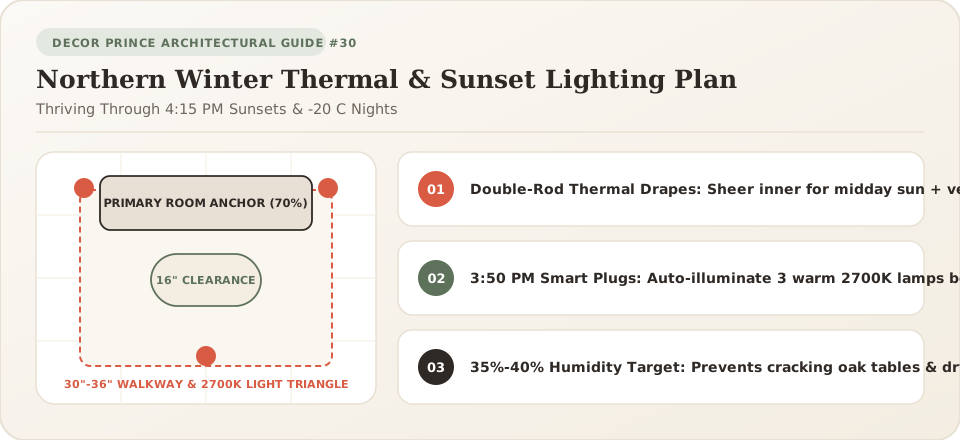
- Hang Thermal-Lined or Heavy Velvet Drapery on a Double Rod: Keep sheer white linen curtains on the inner rod so every ray of precious midday winter sun enters the room between 9:00 AM and 3:30 PM. On the outer rod, hang heavy cotton velvet, wool-blend, or thermal-backed linen panels that extend to the floor (see our Curtain Measuring Guide). Pulling those outer curtains closed at 4:30 PM traps a dead-air insulation pocket against the cold glass.
- Add a 1/4-Inch Felt Pad Under Area Rugs Over Cold Floors: Ground-floor apartments, rooms above unheated garages, and concrete high-rise slabs suck heat right out of your feet. Slipping a dense recycled-felt rug pad underneath your 8′×10′ wool rug acts like thermal underwear for your floor.
- Slide a Weighted Linen Draft Stopper Against the Front Door: In older rentals and townhomes where icy hallway air whistles under the front door threshold, a 36-inch sand- or buckwheat-filled fabric draft snake stops cold floor drafts immediately.
| Winter Comfort Problem | Why It Happens Indoors | Practical Decor & Home Fix |
|---|---|---|
| “4:30 PM Winter Blues” Slump | Walking into a dark apartment or sitting under cold 4000K overhead bulbs | Put 3 table/floor lamps (2700K CRI90+ bulbs) on smart timers set to turn on automatically at 3:50 PM |
| Chilly Sofa Near Window | Radiant cold transfer through large condo glass panes | Pull sofa 4″ away from glass + hang floor-kissing thermal-lined curtains + drape merino/bouclé throw |
| Static Shock & Cracking Wood Furniture | Forced-air heating drops indoor relative humidity below 20% | Run an evaporative or ultrasonic humidifier to maintain 35%–45% relative humidity |
| Wet Salted Boots by the Door | Melted snow pools on hardwood or stains rugs | Raised rubber boot tray filled with river pebbles + dark vintage-pattern washable runner |
2. Beat the 4:15 PM Sunset With Automated “Golden Hour” Lighting
Nothing feels bleaker in January than finishing work at 5:00 PM in total darkness and stumbling into a pitch-black living room. Set up a Sunset Lamp Routine using inexpensive smart plugs or digital outlet timers:
- Plug one floor lamp in the living room, one table lamp on your sideboard, and one small cordless or corded lamp in the entryway into smart plugs.
- Set all three to turn on automatically 20 minutes before local sunset every afternoon.
- Add a micro-strand of warm 2200K–2700K copper-wire fairy lights tucked inside a glass cloche or woven through a bookshelf cubby, plus a flame-free halogen candle warmer lamp melting a cedarwood, balsam fir, or amber candle.
Why Maintaining 35%–45% Indoor Humidity Protects Your Furniture & Health
When winter heating dries indoor air down to 15% humidity, solid oak and walnut dining tables shrink and crack along their glue joints, hardwood floor gaps widen, and your sinuses dry out overnight. Running a quiet bedroom and living room humidifier keeps both your skin and your wood furniture healthy all winter.
3. Bring Living Greenery Indoors When the Landscape Turns White
When everything outside your window is white snow and grey asphalt for four months, having living green leaves inside your field of vision makes a measurable difference in mood. Cluster your hardiest houseplants (Snake Plants, ZZ Plants, Pothos, and Parlour Palms) slightly closer to south- or west-facing windows during winter—making sure their leaves don’t touch freezing window glass—and tuck fresh cut cedar, pine, or eucalyptus branches into stoneware pitchers on the dining table.
Explore Related Seasonal & Lighting Guides:
Common Questions About Winter Home Comfort
Why is water condensing or freezing on the inside bottom edge of my windows in winter?
When outdoor temperatures drop below -15°C, indoor humidity above 45% condenses on cold window glass—especially if heavy blinds or curtains are closed tightly all day trapping moist air against the pane. Lower your humidifier target to 30%–35% during extreme cold snaps and crack your curtains open a few inches during the day so warm room air circulates across the glass.
What is the warmest throw blanket material for a freezing basement or TV room?
100% wool (merino, alpaca, or lambswool) and high-pile sherpa fleece trap far more body heat per ounce than acrylic or chunky polyester chenille. A tightly woven wool plaid throw draped over the back of your sofa stays breathable while keeping you toasty.